Monday, March 15, 2010

"What Do I Need to Know for My Clerkships?": A Look at the Lucian Leape Institute Report on Medical Education


In the world of medical school, spring is a time of transitions. First year medical students are returning from spring break and gearing up for the last stretch of class before summer. Second year medical students are getting ready to buckle down and study for the USMLE Step 1 board exam (good luck to all!). Third year students are on their last clerkship rotations before becoming fourth year medical students. And fourth year medical students are holding their breath as Match Day approaches (this Thursday!). Like any time of transition there are a lot of questions about the future floating around. One of the most honest and interesting questions I have heard recently was from a second year student to a resident, "What do I need to know for my third year clerkships?"

This may sound like a strange question to those outside of the world of medicine. The third year of medical school should be a logical progression from the second year, right? Not exactly. Most medical schools in the United States are structured so that the first two years are spent predominantly in lecture. The first year covers the normal physiology, anatomy, and biochemistry of the body systems and the second year delves into pathology and pathophysiology. These years are marked by long hours in class and little, if any, patient interaction. With at most a two week gap after the USMLE Step 1 exam, third year medical students are then thrown into the hospital wards to learn how to apply the basic sciences into the practice of patient care. Are these new third year medical students ready to care for patients?

The Lucian Leape Institute of the National Patient Safety Foundation says, "no." Just last week, the Lucian Leape Institute released its first of a series of reports on patient safety. The first report, titled: “Unmet Needs: Teaching Physicians to Provide Safe Patient Care,” finds that U.S. medical schools are not adequately teaching students how to provide safe patient care. Click here to read the report....

Read the full post on the IHI Open School Blog

Monday, February 15, 2010

Understanding the Incomplete Medical Diagnosis


*names and some details have been changed to maintain and protect privacy*
If multiple sclerosis was an anatomy review item, I can just imagine Dr. Zeller pointing at the spinal cord and asking me, “Eva, what is the clinical presentation of multiple sclerosis?” After overcoming the anxiety of being “pimped,” my response would probably include symptoms such as: muscle weakness, difficulty in moving, difficulty with balance, visual problems, fatigue, and pain. Before meeting my patient volunteer, Casey, that’s how I characterized multiple sclerosis. The mental image in my head also included a wheelchair. This snapshot of multiple sclerosis is the medical mold that physicians give to their patients upon diagnosis, which I used to think was complete and scientifically correct.

After almost six months with Casey, I now understand that this sort of medical mold is incomplete. This medical mold is analogous to giving an unknowing sculptor a headless cast of Michaelangelo’s David and telling him that this represented Michaelangelo’s complete masterpiece. What was missing in the medical mold of multiple sclerosis (MS)?

What was missing was Casey...

Click here to read the full post on the IHI Open School Blog!

Being Honest: Ducking Out from Under the Table


My adorable dog, May, has her flaws. Her bark and temper are infamous in our neighborhood. If the toy is not made of rubber, it will become an unrecognizable ball of mush within days. However, when it comes to going out to do her business, May almost never has accidents. On those rare occasions she has does have an accident, she hides under the dining room table instead of running to greet us when we arrive home.

We understand why these accidents happen. Analogous to most medical errors, May's accident is a systems error. These accidents only occur when we leave the house for a long period of time without allowing her to go out before we leave. May was not being negligent or purposefully filthy; the system she lives in simply does not allow her to successfully avoid these accidents...

...Medical malpractice is one of the few bipartisan goals of the current health reform battle. However, how to reform this messy process that is hard on all participants (physicians, hospitals, patients and families, and insurers) emotionally and financially is not as clear. Focusing on how to minimize costly lawsuits through caps on financial damages awarded to patients further complicates the fundamental courtesies that should occur when a mistake happens: acknowledgement, understanding, acceptance, and forgiveness...

Click here to read the full post on the IHI Open School Blog.

Wednesday, February 3, 2010

Too many drugs?

Ever wondered about the contents in your medicine cabinet? Or the forces that got you on those prescription medications in the first place?

This NPR editorial does a great job bringing to light how Merck’s Fosamax for ostopenia, a condition deemed treatable by this drug, got into the cabinets of million women across America. And how the marketing of the pill changed the definition of bone disease and sought women to seek unnecessary treatment.

This pharmaceuticalisation phenomenon, meaning the pharma companies quest to turn every research endeavor into a blockbuster drug highlights the manipulative role of drug companies in deciding what constitutes the definition of a disease just so they can market a drug to cure it.

Set against the backdrop of the controversial evolution of ostopenia as a disease, we read about how pharma companies are vying to get the FDA to sign off on a prescription pill for jet lag! Do we really need a pill for jet lag? Or worse yet, should we let the pharmaceutical industry decide which drugs fit what therapies? With spiraling healthcare costs are we going to let pharmaceutical companies hold the reigns?

More importantly, can we draw the line between treatment, research and development for the greater good versus drugs that are downright redundant?

Practicing medicine by numbers

In a system of upside down incentives – a fee-for-service payment model that results in doctors doing too much – more tests, more procedures and more treatments, left almost entirely up to a doctors “informed intuition”.

Intuition indeed is necessary in medicine, explains Jerome Groopman, in How Doctors Think, but can lead doctors astray. Numbers on the other hand can help resolve quality variation by data-driven methods.

After years of knowing the benefits of beta-blocker prescriptions, safety checklists and so called ‘evidence based practices’, what keeps doctors from doing what they know? Can we afford to rely on the variability of their good judgment and intuition? Why are quality managing practices like lean and Six Sigma facing so much resistance in the practice of healthcare?

Quite simply put, because we trust our doctors to do what is best for us. Hospitals and physicians that provide less than top-quality care are rarely punished. There is that, and how we pay for healthcare. Volume care is compensated, irrespective of the added value for patients.

In the midst of the country’s struggle to health reform (or lack thereof),this article offers a refreshing look at what can be done right. Brendt James – the champion of the ‘Intermountain way’ challenges doctors to continuously test and tweak protocols, set clinical goals, track patient outcomes and deliver quality care at low costs – offers reason for optimism.

Thursday, November 19, 2009

Hiding In Plain Sight: A Lesson in Human Factors Engineering

Dr. John Gosbee was our featured guest speaker this past Monday at our November Open School meeting. John is a Human Factors Engineering (HFE) and Healthcare Specialist who lectures frequently in the UM community for students and healthcare professionals and also has his own HFE healthcare consulting company with his wife. His interactive talk was an engaging introduction to a field very relevant to healthcare improvement. John gave us a brief history of HFE, including its birth as early as 1950 in the aviation field. As with the LEAN and other automotive engineering philosophies we have to wonder why it has taken so long for this insight to reach healthcare?

John’s talk challenged us to look at the poorly designed features ubiquitous in our daily lives, literally “hiding in plain sight”. I deal wi
th poorly designed features everyday without thinking too much about them: from the frustratingly enigmatic knobs on my own stove that confuse me every time I try fry an egg, to features of my car that keep me guessing each time I attempt to use them, like how I usually pop open my trunk and gas tank at least 5 times when I attempt to open the hood of my car (even Toyota isn’t perfect!)

Although initially amusing, as John next discussed the context of healthcare, these seemingly idiosyncratic details quickly became terrifying. For instance, the design features of many I
V medications and solutions commonly lead to fatal errors by nursing staff or pharmacists who misread the practically identical packages/labels.

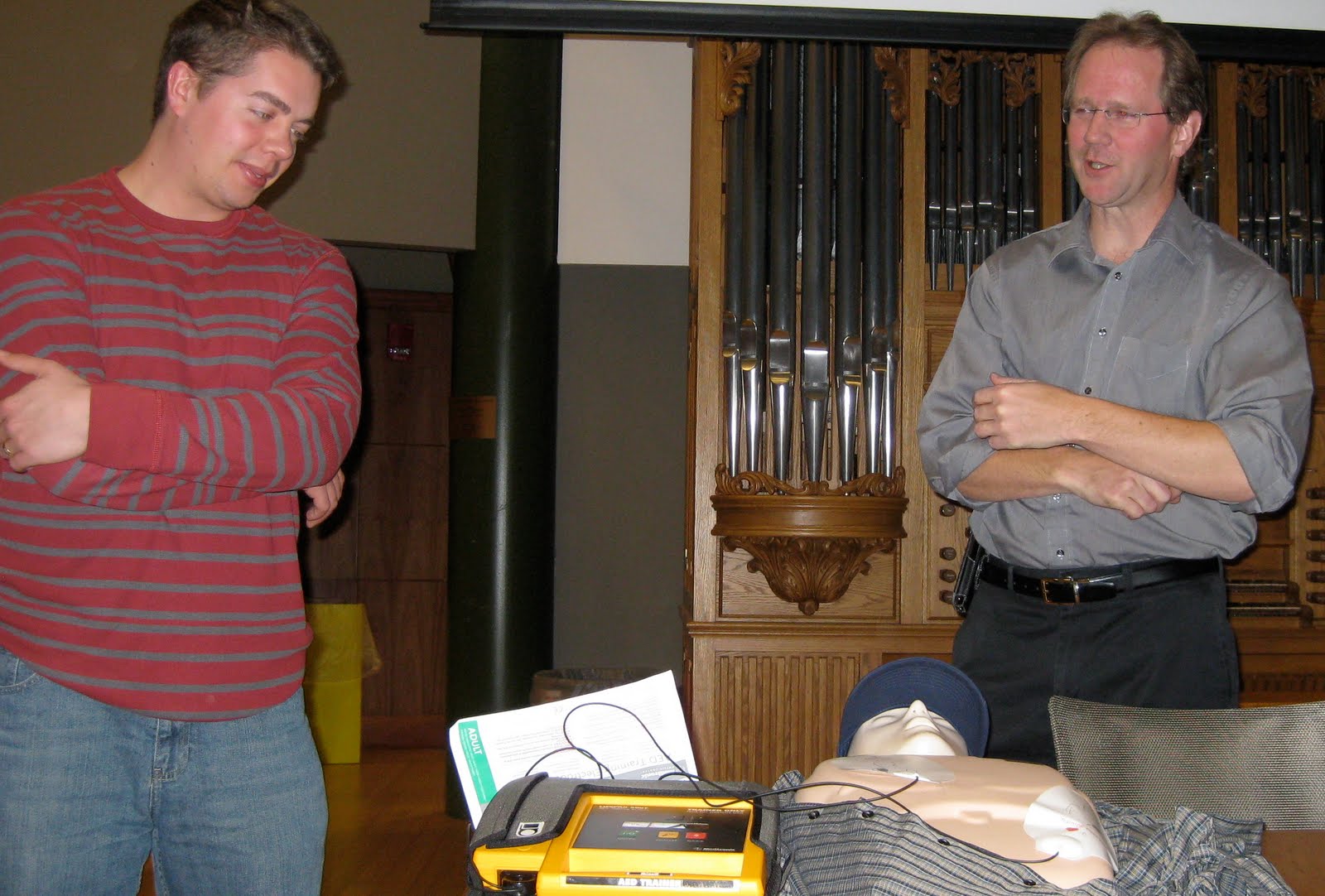
The first exercise is pictured below- students were told to hold their breath and were handed epipens (fake ones without needles) and we were challenged to determine how to administer the drug before letting out our breath. Nearly six students were required to attempt what should be a simple task in light of the pressure of an emergency situation when an individual is going into anaphylactic shock! Personally, I misread the overwhelmingly detailed instructions and would have injected myself with epinephrine had it been a real needle...


The exercise reinforced the point that in healthcare, the more small things that build up requiring workarounds due to impractical design, the less we become able to compensate. Catastrophes result in the form of medical errors. While there are of course lessons to be learned by the engineers who design programs and tools used in healthcare to be user friendly and simple, there is a great deal of value for healthcare professionals to learn to spot these hazards. Developing an acute awareness of the design of tools utilized in the healthcare industry and an intentional mindfulness that workarounds are inefficient may alleviate further complications.

Apparently it's quite rare for a hospital or health system to employ an individual with the role of "human factors engineer" to watch out for threats posed by problematic design features. Therefore, knowing that small adjustments can lead to large, statistically significant improvements it seems crucial that we, as healthcare professionals, attempt to adopt similar mindsets.

As John explained, poor designs can be reported--for instance, the example of the insulin "pen" that he presented was one that was reported to the FDA because the numbers were reverseable depending on how the user held the pen. If US regulatory agencies receive feedback about patient safety threats it is feasible that they will be amended-at least moreso than if never reported! Relevant stakeholders are not limited to frontline caregivers; pharmacy, billing, purchasing and nursing departments all have something to gain by maintaining a critical eye to the design features of the electronic ordering systems, medical devices and other tools commonly used.

That's continuous quality improvement at its best.

Monday, November 9, 2009

A Grey's Take on To Err is Human


Hi, my name is Eva and I watch Grey’s Anatomy.

I started about three years ago with the hotly anticipated Season 2 Finale and have been addicted ever since. I have tried to stop and had hoped that a change in environment (back in school and no TV) would stop this unhealthy habit. But, I have been unsuccessful. In fact, I believe I have reached a new level of addiction.

At the end of every episode I watch, I have been able to extract a lesson to justify my time spent following the lives of the characters at Seattle Grace Hospital. I tell myself that these lessons learned will help me become a better doctor…

...But, do I feel safer or sense the improvements made whenever I interact with the health care system? As this episode of Grey's Anatomy demonstrates, tangible and measurable progress is probably still not yet within our grasp.

Once we get there, this episode should be rewritten. Seattle Grace will be a shining example of the transformation of the culture of medicine. All of the characters would not be individual heroes searching for glory, but would support each other in order to deliver better care for their patients. The Chief and hospital leadership would not bury mistakes like Mrs. Becker's death, but would take the time to identify root causes of the error and fix the system. And every single person would critically evaluate and make improvements to the complex work processes of delivering health care...

Click here to read the full post!